Austrian Licensing Shifts Reshaping Provider Tactics for Secure Live Dealer Interfaces and Wagering Mechanics
Geschrieben von Drew Schmitz · 1.9.2026
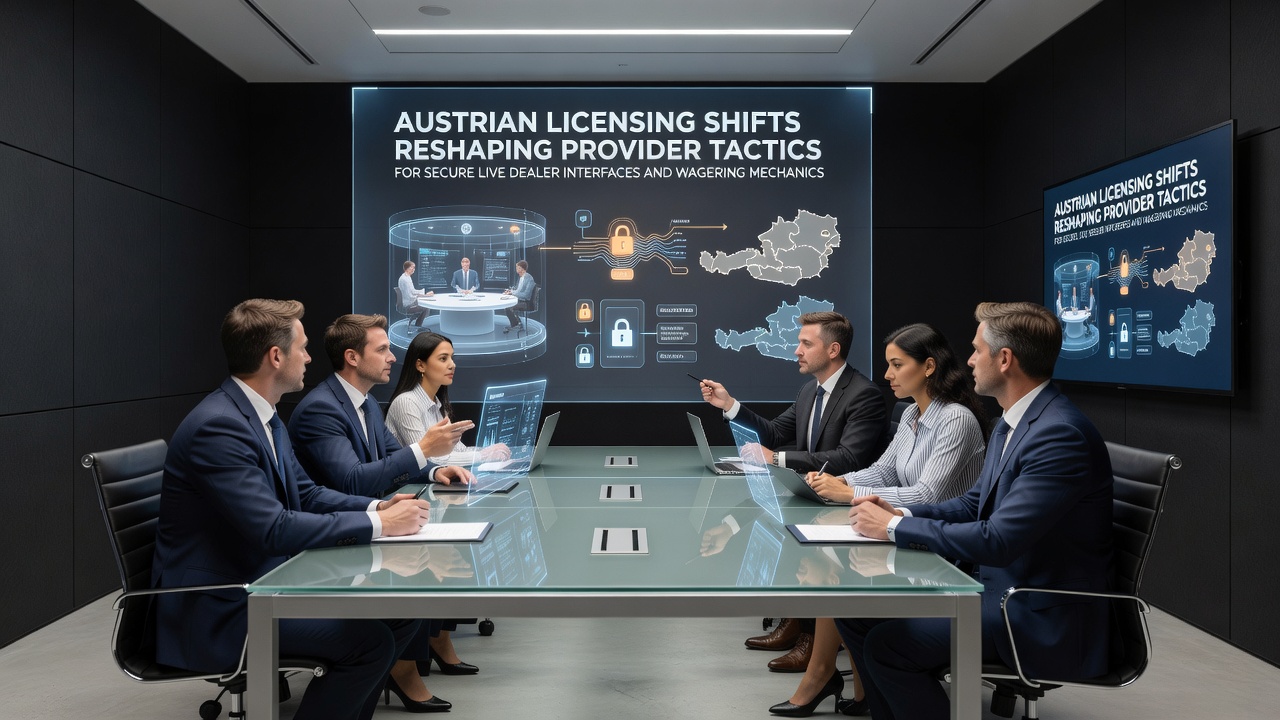
Austrian Licensing Shifts Reshaping Provider Tactics for Secure Live Dealer Interfaces and Wagering Mechanics
Recent adjustments to Austria's gambling licensing framework have prompted providers to revise their approaches to live dealer platforms, with particular attention to interface security protocols and the underlying mechanics that handle real-time wagers. Data from the Austrian Federal Ministry of Finance shows that revised license conditions now emphasize encrypted video streams, multi-factor authentication layers, and continuous monitoring systems for dealer interactions. These requirements build on earlier standards yet introduce stricter benchmarks that take effect in phases through September 2026, when full implementation deadlines arrive for all active operators.
Providers have responded by integrating additional encryption modules directly into their streaming pipelines, a change that reduces latency while maintaining compliance with data protection rules. Observers note that companies such as those supplying European markets have begun testing hybrid systems that combine traditional RNG backups with live video verification, ensuring that any discrepancy triggers automatic session pauses. This tactic addresses both regulatory expectations and player protection mandates without altering core game rules.
Key Changes in License Conditions
The updated licensing process requires applicants to demonstrate that live dealer interfaces incorporate end-to-end encryption and independent audit trails for every wager placed during a session. Figures released by the European Gaming and Betting Association indicate that license renewals in Austria now include mandatory third-party penetration testing at six-month intervals, a schedule that exceeds previous annual reviews. Providers must also submit detailed logs of wagering mechanics, including bet acceptance timestamps and payout calculations, to regulatory bodies for spot checks.
These stipulations have led several international studios to relocate parts of their technical infrastructure within EU borders, a step that simplifies data residency compliance. One study from a Canadian research institute found that similar geographic adjustments reduced cross-border latency issues by 18 percent in comparable jurisdictions, suggesting parallel benefits for Austrian operations. Meanwhile, software teams have begun embedding automated compliance alerts into dealer control panels, allowing real-time flags when interface parameters drift outside approved ranges.
Technical Adaptations for Live Interfaces
Live dealer platforms face new demands around camera angles, dealer authentication, and synchronization between physical tables and digital overlays. Providers have introduced biometric checks for dealers alongside facial recognition systems that cross-reference against approved personnel databases. Such measures help maintain session integrity while meeting the licensing emphasis on verifiable human oversight rather than fully automated alternatives.

Interface redesigns now prioritize modular layouts that isolate betting controls from video feeds, reducing the risk of overlay tampering. Research indicates that separating these elements allows faster updates to wagering mechanics without requiring full system recertification. Providers have also adopted containerized deployment methods that isolate each game instance, enabling targeted security patches during active sessions rather than scheduled maintenance windows.
Adjustments to Wagering Mechanics
Wagering systems connected to live dealer tables must now log every action with immutable timestamps and cryptographic hashes, a requirement that influences both front-end displays and back-end settlement engines. Developers have shifted toward microservice architectures that separate bet validation from payout processing, which simplifies audit processes and supports the granular reporting demanded by Austrian authorities. Evidence from industry reports shows that these architectural changes have lowered dispute resolution times by roughly 25 percent in early adopters.
Additional rules around maximum bet limits and session duration tracking appear in the revised license terms, prompting providers to embed dynamic controls that adjust automatically based on player history and regulatory thresholds. These mechanics operate alongside existing responsible gaming tools yet add another layer of automated oversight that activates during high-volume periods.
Implementation Timeline and Industry Response
Rollout of the new licensing criteria began in early 2025, with interim milestones set for March and September 2026. Providers who secured transitional approvals have reported reallocating engineering resources toward interface hardening rather than feature expansion. Data compiled by academic researchers at European universities highlights that firms prioritizing modular security frameworks completed their adaptations ahead of schedule, whereas those relying on monolithic codebases encountered longer review cycles.
Collaboration between software vendors and local testing laboratories has increased, resulting in standardized test suites that cover both live video integrity and wagering algorithm accuracy. These joint efforts reduce duplication of effort and accelerate the path from development to regulatory sign-off.
Conclusion
Austria's evolving licensing landscape continues to drive measurable changes in how providers secure live dealer interfaces and structure wagering mechanics. The combination of encryption mandates, audit requirements, and phased deadlines through September 2026 has produced documented shifts in technical architecture and operational procedures across the sector. Continued monitoring by regulatory bodies will determine whether these adaptations establish new baseline standards for other European markets.