Austria's Certification Pathways for Verifying Provider Compliance in Mobile Table Game Offerings
Geschrieben von Paul Schmitz · 23.8.2026
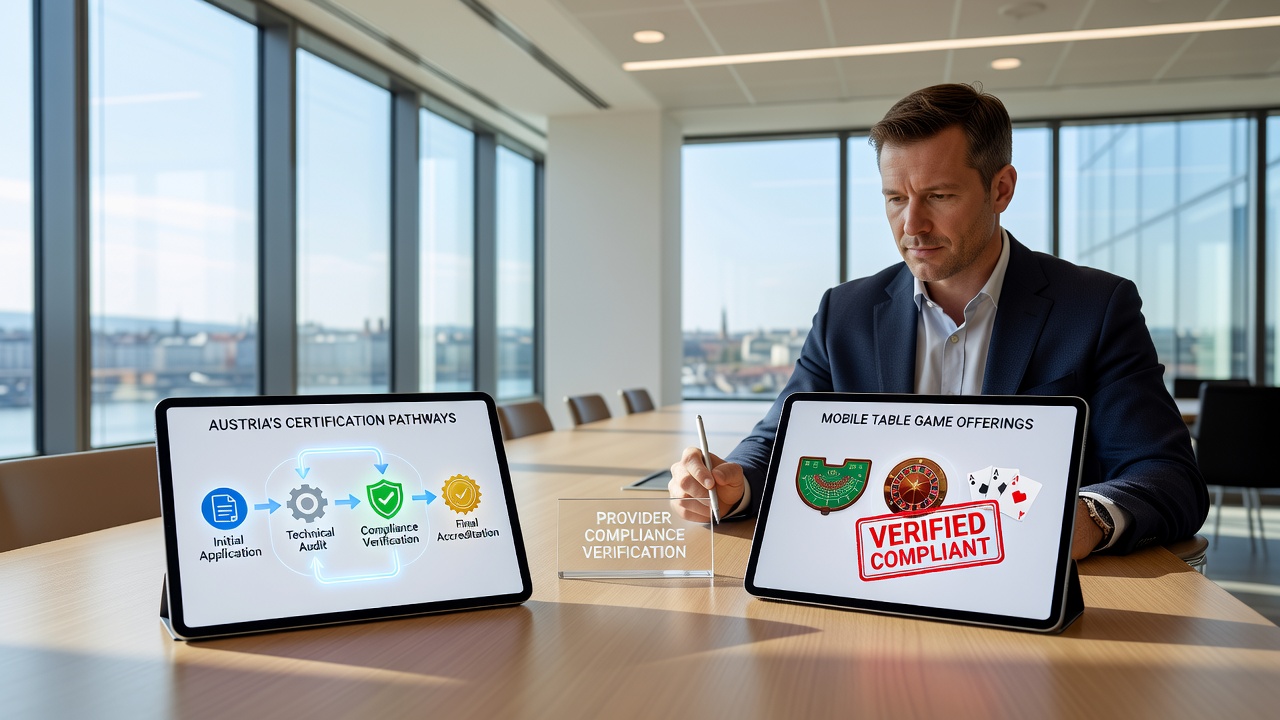
Austria's Certification Pathways for Verifying Provider Compliance in Mobile Table Game Offerings
Austria maintains a structured system for certifying mobile table game providers, and this framework centers on compliance verification through multiple layers of testing and approval that operators must navigate before launching offerings such as blackjack, roulette, or baccarat on smartphones and tablets. The process begins with submission of game software to accredited laboratories, where independent evaluators assess random number generators, payout algorithms, and security protocols against national standards set by the Bundesministerium für Finanzen.
Those who oversee these evaluations note that providers receive initial certification only after demonstrating adherence to technical specifications that cover both desktop and mobile environments, since August 2026 updates introduced stricter mobile-specific requirements for latency handling and device compatibility checks. Data from regulatory filings shows that laboratories complete core fairness tests within four to six weeks, although complex multi-player table variants often extend timelines when additional network stress simulations become necessary.
Regulatory Framework and Oversight Bodies
Austria's gambling legislation assigns primary authority to the Ministry of Finance, which coordinates with specialized testing institutes to confirm that mobile table games meet player protection criteria including responsible gaming features and transaction encryption standards. Observers note that this centralized approach differs from decentralized models in other European jurisdictions, yet it produces consistent outcomes because all providers must satisfy the same set of technical guidelines before receiving operational licenses.
Research indicates that compliance verification extends beyond initial approval, since ongoing monitoring requires quarterly reports on game performance metrics and incident logs. Providers who fail to maintain these standards face suspension of mobile offerings until remediation occurs, and figures from the Ministry reveal that such interventions remained stable through mid-2026 despite growth in the number of licensed table game titles.
Step-by-Step Certification Pathways
Certification begins when a provider submits detailed documentation covering game rules, mathematical models, and source code to an approved laboratory. Evaluators then conduct RNG audits to verify that each card shuffle or wheel spin produces results within defined probability ranges, while mobile-specific tests examine how interfaces behave across different operating systems and screen sizes. After laboratory clearance, the Ministry reviews the full package and issues formal certification that allows deployment on licensed Austrian platforms.
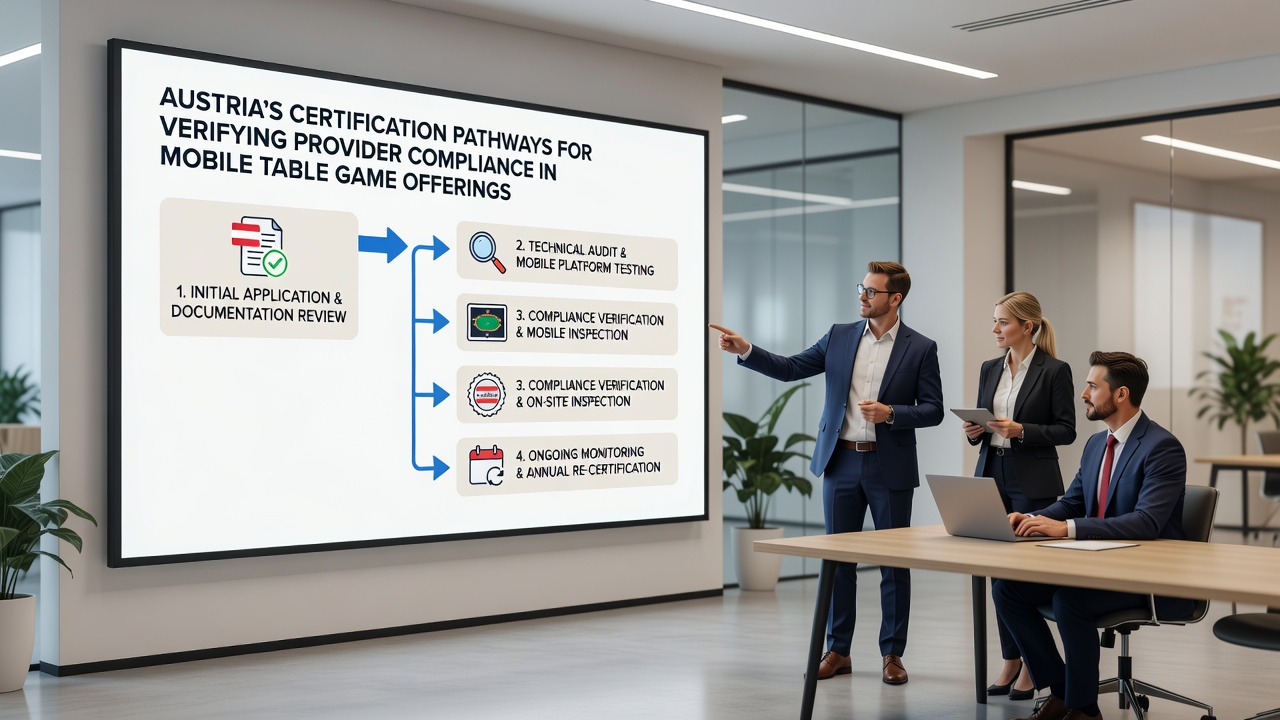
Additional pathways exist for providers seeking recognition of foreign certifications, although these routes still require supplementary Austrian validation to confirm alignment with local data protection and advertising rules. Those who've navigated the system report that hybrid approvals, which combine European Union testing standards with national requirements, often shorten overall timelines by several weeks when documentation proves complete from the outset.
Verification Methods and Technical Standards
Verification relies on both automated scanning tools and manual code reviews that identify vulnerabilities in mobile applications before public release. Standards mandate that encryption protocols protect all player data during transmission, and testing protocols include simulated attack scenarios to measure resilience against common exploits. According to industry reports from the European Gaming and Betting Association, Austrian requirements for table game certification rank among the more rigorous in the region because they incorporate real-time monitoring capabilities that flag anomalous betting patterns immediately.
Further checks cover return-to-player percentages and maximum bet limits, which must remain consistent whether users access games via Wi-Fi or cellular networks. Research from academic sources such as the University of Melbourne's gambling studies program highlights that mobile environments introduce unique variables like variable latency, prompting Austrian regulators to require additional validation layers that desktop versions do not always undergo.
Recent Developments and August 2026 Updates
August 2026 marked the implementation of revised technical guidelines that emphasize enhanced mobile security features, including mandatory biometric authentication options and improved session timeout controls. Providers already holding certifications underwent streamlined re-evaluation processes that focused primarily on the new mobile criteria rather than full re-testing of core game mechanics. Ministry statistics indicate that over ninety percent of existing licensees completed the transition within the allotted compliance window.
These changes also introduced clearer pathways for smaller development studios to achieve certification through modular testing options, allowing them to certify individual game components before integrating them into complete table offerings. Such flexibility has encouraged greater participation from specialized providers while maintaining the same verification rigor applied to larger operators.
Conclusion
Austria's certification pathways for mobile table game compliance combine laboratory evaluation, ministerial review, and continuous monitoring to ensure providers meet technical and regulatory obligations. The system continues to evolve with technological advancements, and the August 2026 updates demonstrate ongoing adaptation to mobile-specific challenges. Those monitoring the sector note that consistent application of these standards supports both provider accountability and player safeguards across all licensed offerings.