Regulatory ripples through Austrian mobile platforms: how compliance mandates reshape live dealer mechanics and responsible play integrations for poker variants across competing studios
Geschrieben von Drew Schmitz · 15.9.2026
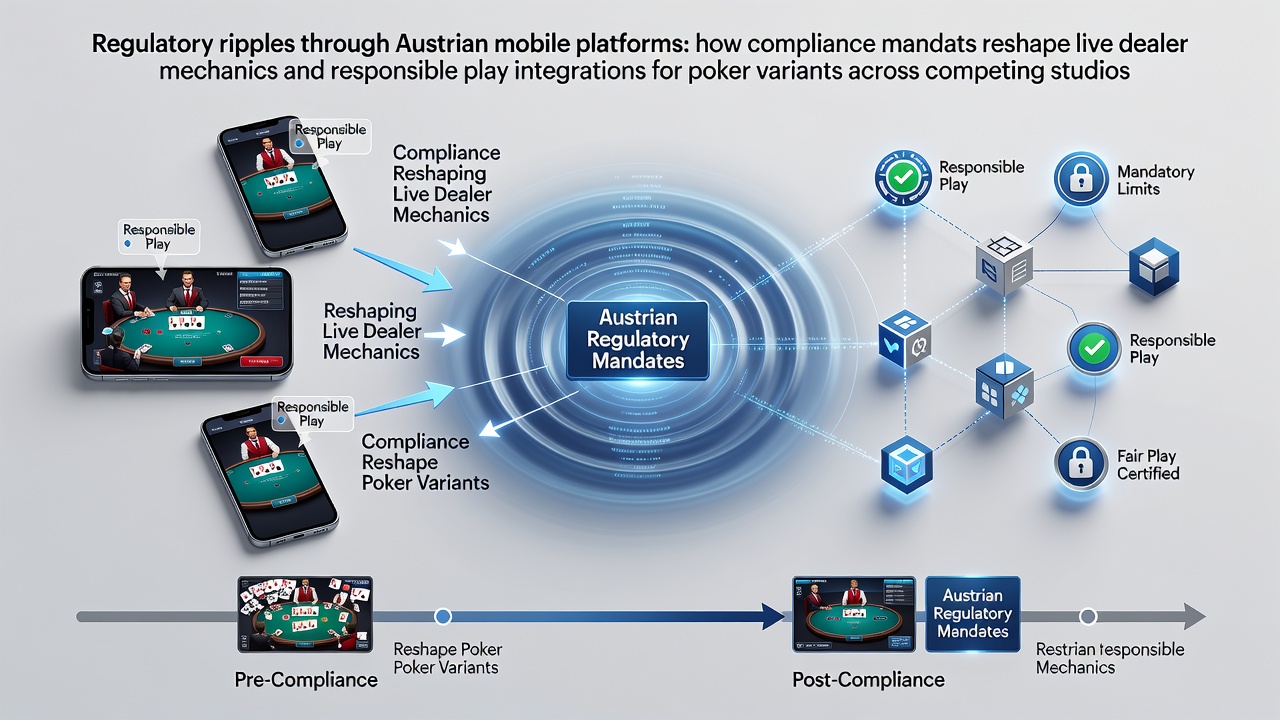
Regulatory ripples through Austrian mobile platforms: how compliance mandates reshape live dealer mechanics and responsible play integrations for poker variants across competing studios
Regulatory changes in Austria continue to influence mobile gambling platforms, particularly those offering live dealer poker variants, where compliance requirements drive adjustments to game mechanics and responsible play features across multiple studios.
Current regulatory framework and upcoming adjustments
Austrian authorities enforce standards through the Gaming Act and related federal guidelines that apply to licensed operators handling mobile table games, including poker formats such as Texas Hold'em and Omaha, with data from the Austrian Federal Ministry of Finance showing increased scrutiny on live streaming protocols since early 2025.
These mandates require platforms to integrate real-time monitoring tools that track player sessions while maintaining seamless dealer interactions, and studios respond by embedding compliance layers directly into their software architectures rather than treating them as separate add-ons.
Live dealer mechanics under compliance pressure
Live dealer interfaces for poker variants now incorporate mandatory delay mechanisms and verification checkpoints that align with responsible gaming protocols, allowing operators to pause action during high-velocity betting rounds without disrupting the visual flow of cards and chips on screen.
Competing studios adjust camera angles, dealer pacing, and multi-table synchronization features to accommodate audit trails that regulators can access on demand, and this integration occurs while preserving the interactive elements that distinguish live poker from automated RNG versions.
Technical adaptations across studios
One major provider modified its mobile poker lobby to include automatic session timers tied to Austrian self-exclusion databases, whereas another studio introduced geo-fencing combined with biometric checks at the start of each live dealer round, ensuring that players remain within licensed parameters throughout extended play periods.
These modifications appear in response to certification pathways that demand verifiable logs of every hand dealt, and the changes affect everything from chat moderation tools to the timing of side pot resolutions in multi-player formats.

Responsible play integrations in poker environments
Compliance rules push studios to embed spending limits, reality checks, and voluntary cooling-off prompts directly into the live dealer interface, often triggered at predefined hand counts or time intervals rather than as external pop-ups that could interrupt immersion.
Research from the European Gaming and Betting Association indicates that such embedded tools see higher usage rates when they align with natural game breaks, like between tournament levels or after a showdown sequence, and Austrian operators apply these patterns to maintain both regulatory adherence and player retention.
Platforms differentiate their offerings by customizing how these features appear in variants such as Pot-Limit Omaha versus No-Limit Hold'em, tailoring notification frequency and visual design to suit the pace of each game type while still meeting uniform federal reporting standards.
Market responses and studio competition
Studios compete by refining their compliance infrastructure, with some investing in shared technology platforms that allow smaller operators to meet the same technical thresholds as larger competitors without building every control from scratch.
September 2026 marks the scheduled rollout of enhanced data-sharing requirements between licensed mobile platforms and the central Austrian gambling registry, prompting preemptive updates to live dealer APIs that connect poker tables to national exclusion lists in near real time.
Observers note that these synchronized systems reduce the risk of players circumventing limits across multiple apps, while studios that adapt early gain advantages in certification speed and marketing approvals.
Conclusion
Austrian compliance mandates continue to shape the technical and operational landscape for mobile live dealer poker, driving studios toward integrated solutions that balance regulatory demands with functional gameplay across competing platforms.